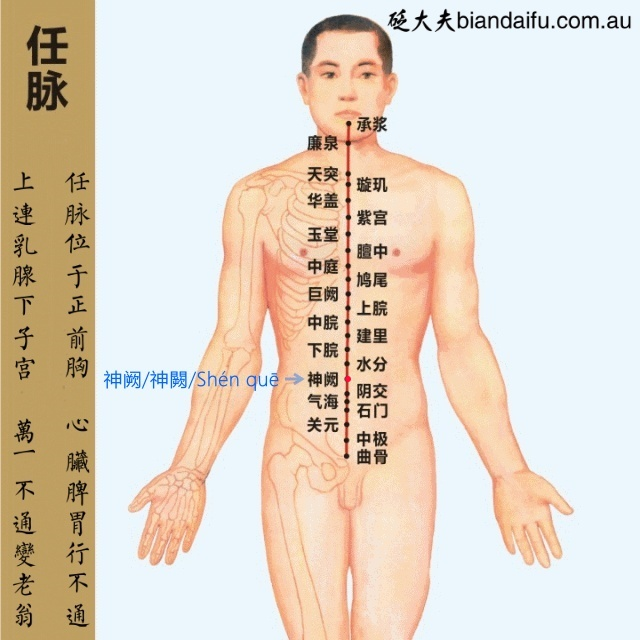
穴位代码:RN8 穴位名:神阙穴Shenque 别名:脐中,气舍,气合
释义:神阙穴就是肚脐,是连接脐带的地方。它是人体300多个穴位中唯一能看得见,摸得着的穴位,变化莫测为神,阙指要处,穴当脐孔,是处胎生之时,连系脐带以供胎儿之营养,故又命蒂。名之神阙,是因胎儿赖此宫阙,输送营养,灌注全身,遂使胎体逐渐发育,变化莫测,故名。经常按摩神阙穴是古今养生家的重要修炼方法,能够起到益气养血,调和脾胃,复苏固脱,具有很好的养生保健作用。坚持刺激神阙穴,可使人体的百脉气血随时得以自动调节。击中后,冲击肋间神经,震动肠管,膀胱,伤气,身体失灵。
定位:在脐中部,脐中央。
解剖:穴下为皮肤,结缔组织,壁腹膜。浅层主要有第十胸神经前支的前皮支和腹壁脐周静脉网。深层有第十一胸神经前支的分支。
经脉:任脉Conception Vessel 五行:
针法:禁针。
灸法:1.神阙隔姜灸:把姜片上穿刺数孔,覆盖于脐上,点燃艾炷在姜片中啄灸,以感温热且舒适为度。每次灸15〜20分钟,隔日1次,每月灸10次,此法对寒邪引起的消化不良,腹痛诸症有预防作用。2.隔盐灸:取少量食盐放在脐窝,上面放钱币大小的生姜片,再拿艾条灸。此法有温牌胃,补肾阳的作用。
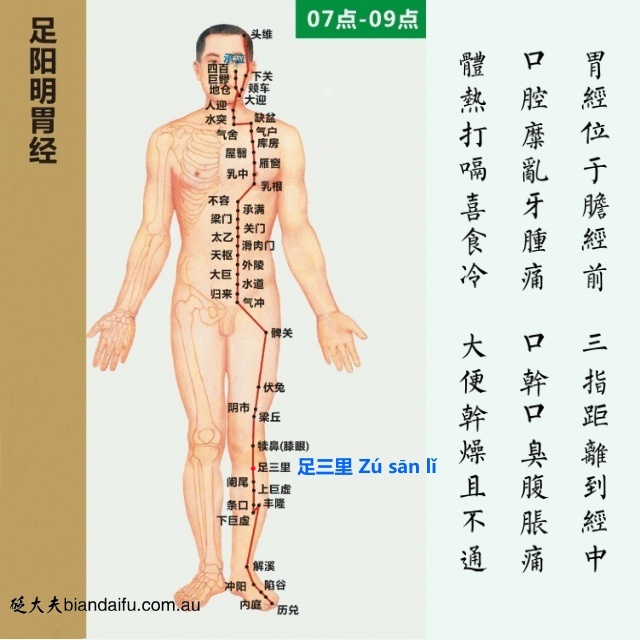
按摩法:指压本穴时宜选择空腹或饭后2小时进行,同时用纱布覆盖穴位,以防止肚脐挫伤或感染。1.晚睡前空腹,把两手搓热,双手左下右上叠放在肚脐上,顺时针抖转(女子相 反),每次揉360下。2.是揉中法:每晚睡前空腹,将双手搓热,双手左下右上叠放于肚脐,顺时针揉转 (女子相反),每次下。3.聚气法:端坐,放松,微闭眼,用右手对着神阙空转,意念将宇宙中的真气能量向脐中聚集,以感觉温热为度。4.意守法:放松,盘坐,闭目,去除杂念,意念注于神阑,每次半小时以上,久之则凝神入气穴,穴中真气发生,胎息则慢慢启动。5.神阙拔罐配刺天枢,足三里,益气健脾和胃,治疗泄泻,呕吐。
功效:温阳救脱,开窍苏厥。培元固本,回阳救逆,补益脾胃,理气和肠。
主治:泄痢,绕脐腹痛,妇人血冷不受胎,中风虚脱,尸厥,角弓反张,风痫,水肿鼓胀,肠炎,痢疾,产后尿潴留,胃炎,肠炎,痢疾,风痈,形惫体乏,水肿鼓胀,小便失禁,便秘,厥逆之痰,虚脱,休克,腹痛,腹胀,腹泻,脱肛,尿路感染,遍身出汗,四肢厥冷,形惫体乏,胆囊炎、胆管炎,五淋(包括泌尿系感染、结石、结核、乳糜、前列腺炎等),不孕。
配伍:1.肠鸣腹痛:神阙,足三里。2.脱肛:神阙,长强,气海。3.泄痢不止:神阙,气海,阴陵泉。4.中风脱症:神阙,关元。
Acupoint Code: RN8
Name: Shenque (神阙)
Aliases: Qizhong (脐中), Qishe (气舍), Qihe (气合)
Meaning: Shenque is the navel, the visible and palpable acupoint connecting the umbilical cord. “Shen” signifies mystery/spirit; “Que” = important place/gate. It nourishes the body via prenatal energy circulation. Stimulating Shenque benefits qi and blood, harmonizes spleen and stomach, revives collapse, and supports overall health.
Location: Center of the navel.
Anatomy: Skin, connective tissue, and peritoneum. Superficial: anterior branches of the 10th thoracic nerve, periumbilical venous network. Deep: branches of the 11th thoracic nerve.
Meridian: Conception Vessel (Ren Mai)
Five Elements: —
Needling: Forbidden.
Moxibustion:
Ginger-separated moxibustion: pierce ginger slice, place on navel, burn moxa on ginger, 15–20 min, alternate days, 10 times/month. Benefits digestive cold, abdominal pain. Salt-separated moxibustion: small salt in navel, ginger slice on top, burn moxa. Warms stomach, tonifies kidney yang.
Massage: Best on empty stomach or 2h after meal, optionally with gauze to protect navel.
Evening: warm hands, place on navel, clockwise rubbing (reverse for women) 360 times. Gather qi: sit relaxed, eyes closed, right hand rotate above navel, gather universal qi, feel warmth. Yi-shou method: sit, relax, focus intention on navel, 30+ min to stimulate internal energy. Cupping with Tian Shu and Zusanli: strengthens spleen/stomach, treats diarrhea and vomiting.
Functions: Warms yang, rescues collapse, restores consciousness, strengthens root, tonifies spleen and stomach, regulates qi and intestines.
Indications: Diarrhea, periumbilical pain, amenorrhea due to cold, collapse from stroke, shock, opisthotonus, convulsions, edema, enteritis, postpartum urinary retention, gastritis, dysentery, fatigue, incontinence, constipation, prolapse, urinary infections, excessive sweating, cold limbs, gallbladder/cholestatic disorders, urinary stones, infertility.
Point Combinations:
1.Abdominal rumbling/pain: Shenque + Zusanli.
2.Prolapse: Shenque + Changqiang + Qihai.
3.Persistent diarrhea: Shenque + Qihai + Yinlingquan.
4.Stroke with collapse: Shenque + Guanyuan.